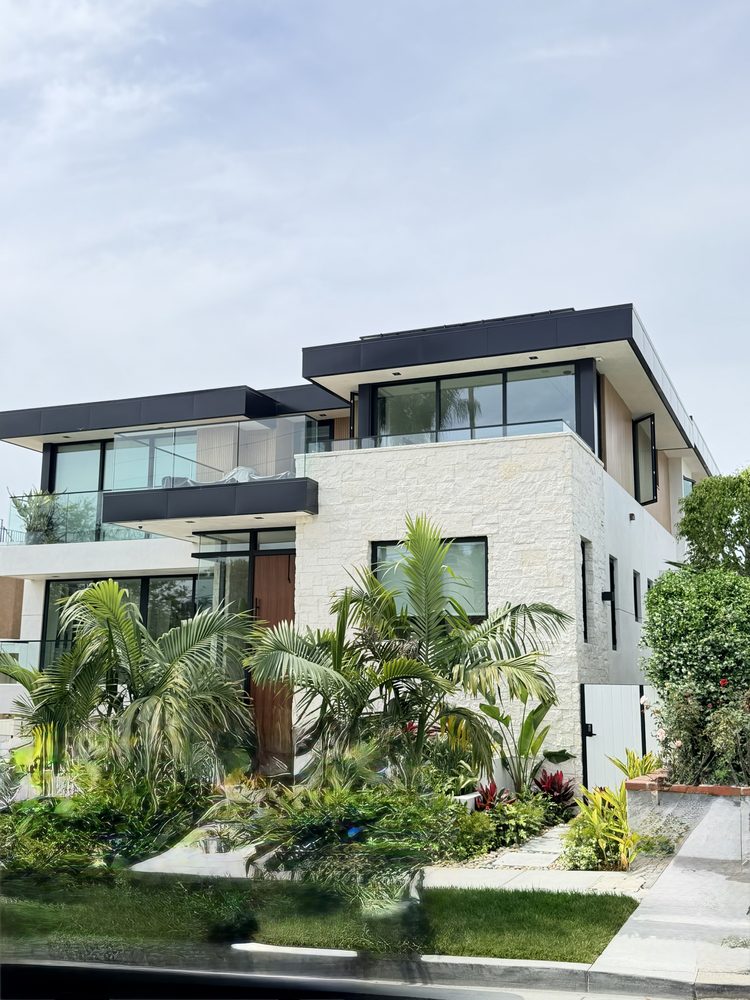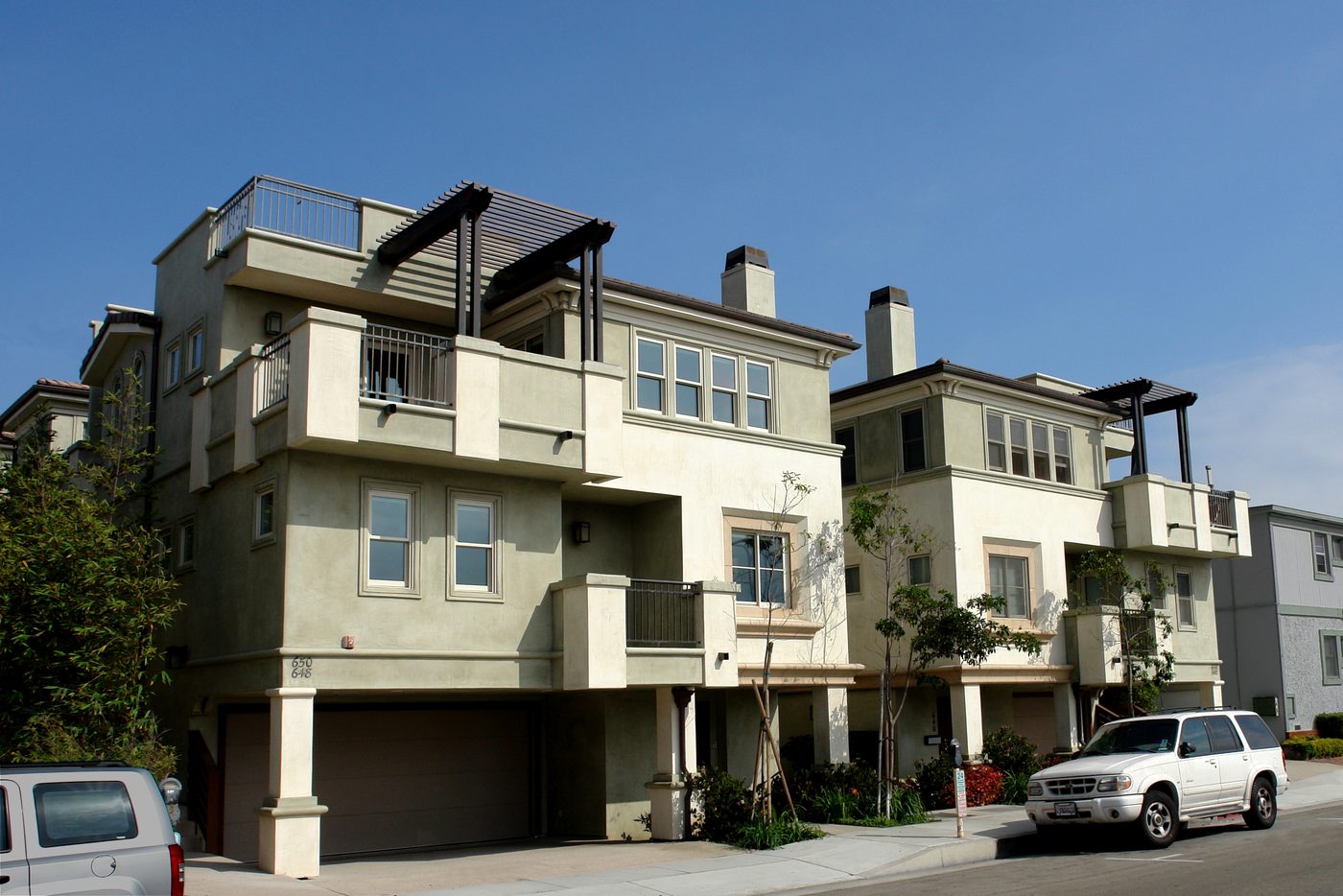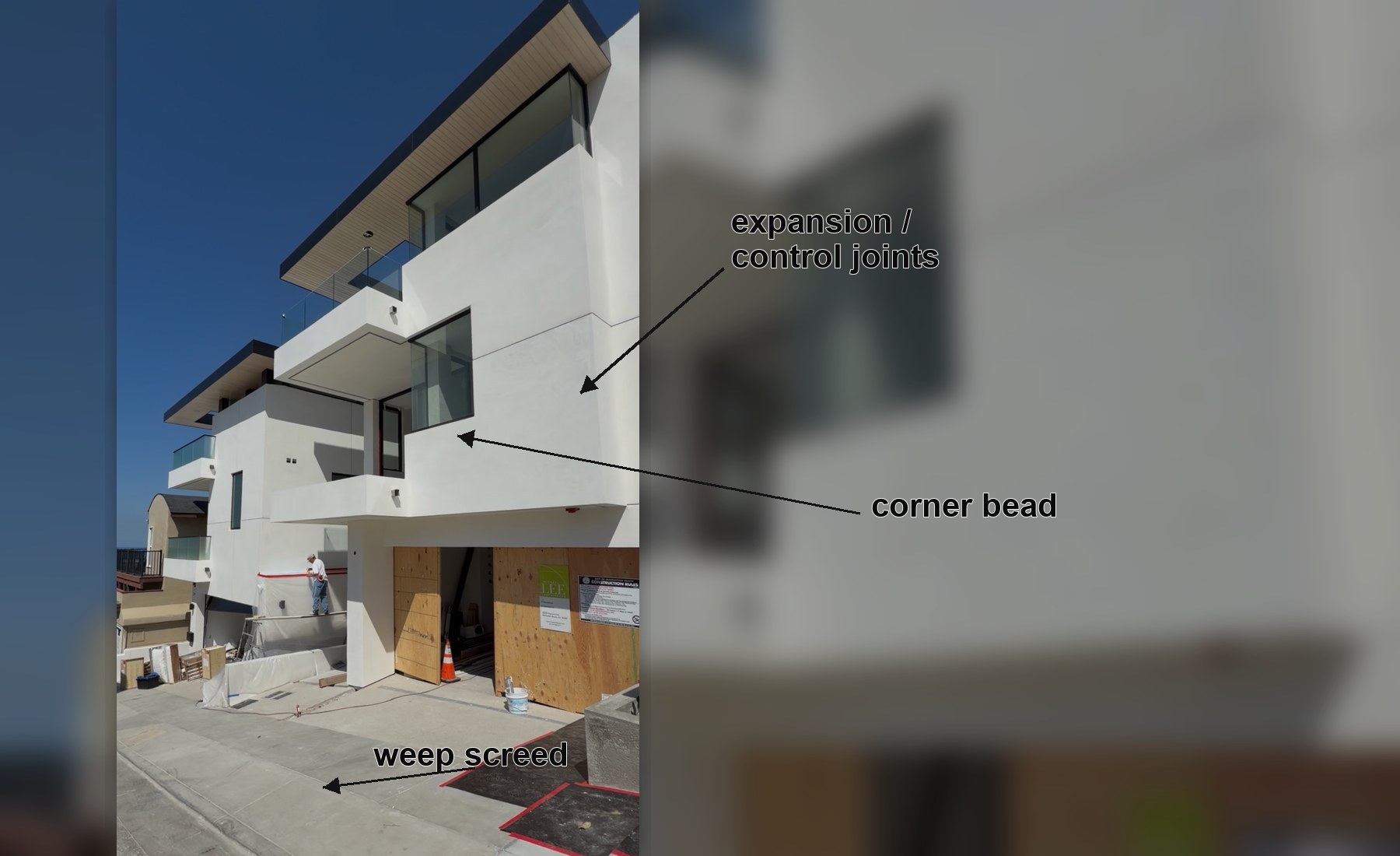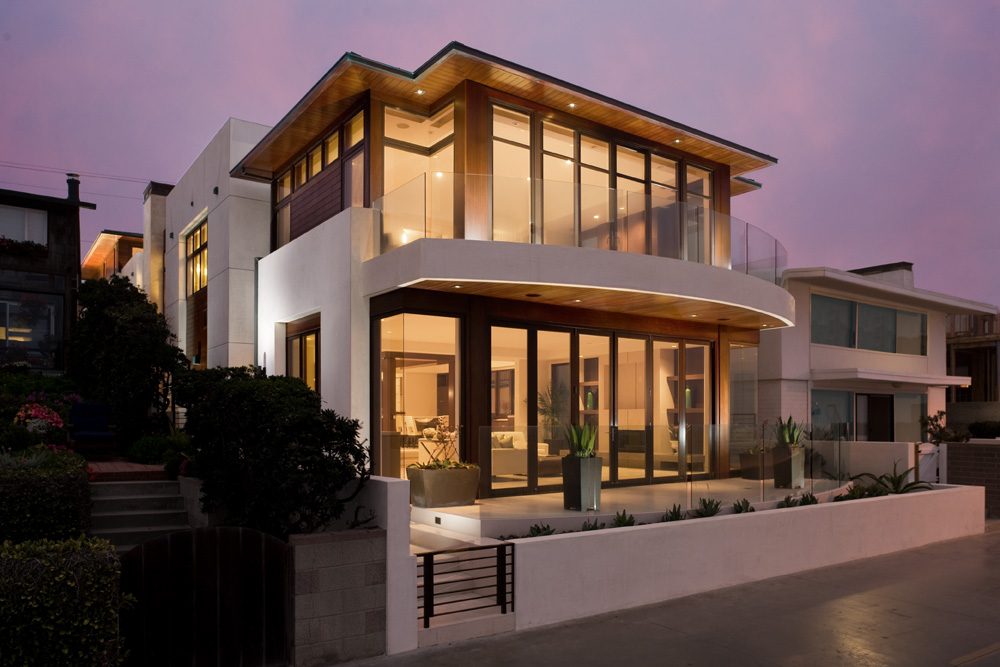
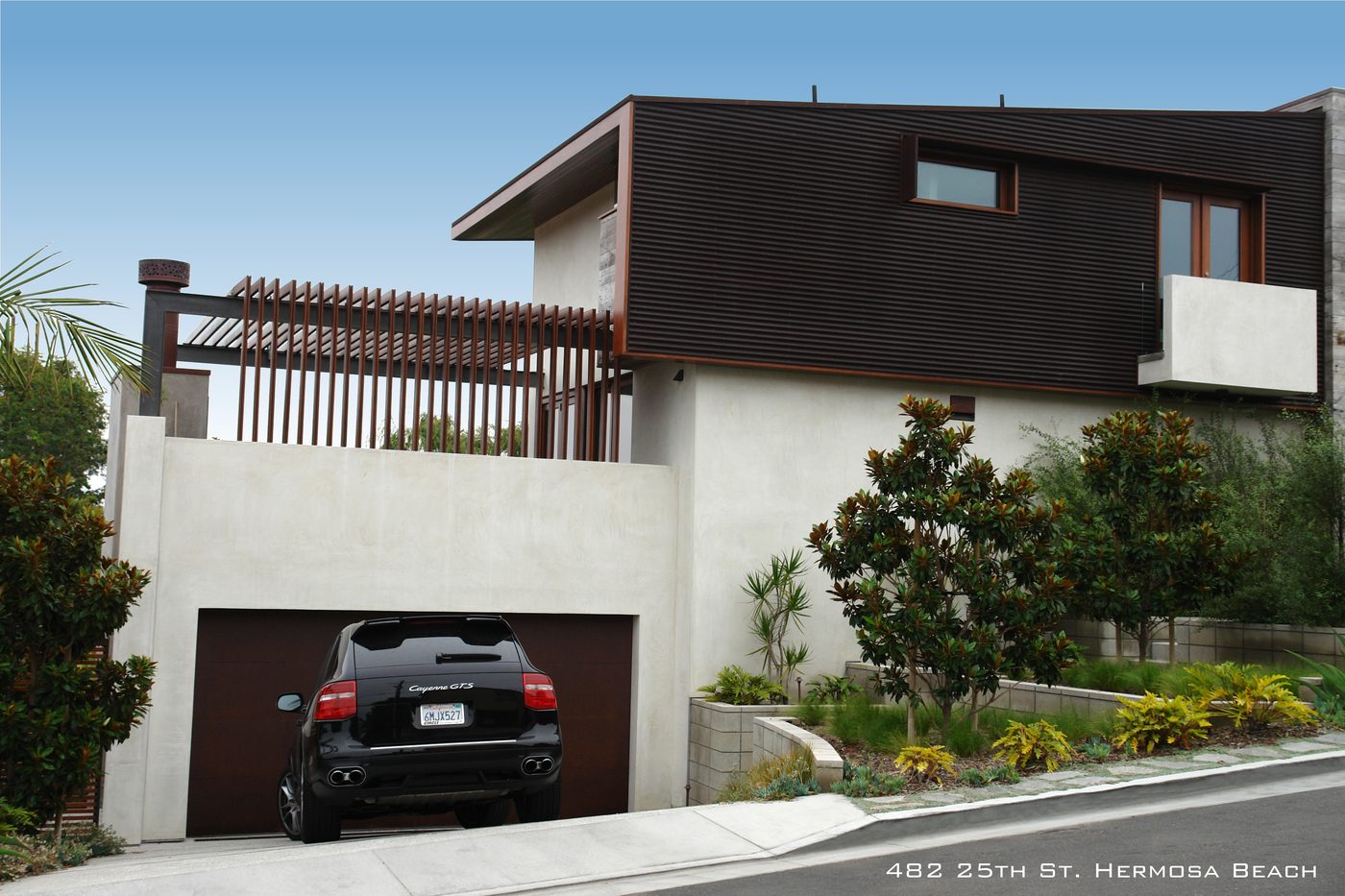
Walk any SoCal jobsite and someone will tell you that one-coat plaster is "just as good" as traditional three-coat. They're right — on the right job. On a tract home, a production multifamily build, or a fast-track tenant improvement, a properly-installed one-coat system gives you a perfectly durable wall in half the time.
But on a ground-up custom home, an oceanfront rebuild, or any wall that's going to be looked at carefully for the next forty years — three coats still wins. Here's why.
What three coats actually does
The traditional scratch / brown / finish system isn't three layers of the same thing. It's three different jobs:
- The scratch coat fills the lath and gives the system its mechanical key. The horizontal grooves we rake into it are what locks the next coat onto a backup that would otherwise be slick metal.
- The brown coat is where the wall gets straight. Float, level, screed. Every plane is set in this coat — once the finish coat goes on, the wall is committed.
- The finish coat is the only one the owner will ever see. It goes on over a cured, flat substrate, which means texture, color, and reflectance stay true across the entire elevation.
What one coat does instead
One-coat fiber-reinforced systems combine the structural job of the scratch and brown into a single 3/8-inch pass, then finish with an acrylic-modified topcoat. The fiber holds the wall together. The acrylic in the finish gives it flexibility.
It works. Tens of thousands of one-coat houses up and down California prove it works. But you give up two things:
- Depth. A 3/8-inch wall reads flatter than a 7/8-inch wall. The eye picks this up under raking light even if it can't name what it's seeing.
- Crack-resistance over the long haul. The fiber holds, but the acrylic-modified finish is rigid relative to the mass of cement underneath. When the structure moves — and it will — the finish is the first place to telegraph it.
When to spec one over the other
We use one-coat on production builds, tenant improvements, and remodel work where the budget and schedule won't carry the traditional system. The finish is fine. Owners are happy.
We push back on one-coat when the project is:
- A custom home where the architect specified a real plaster look
- Oceanfront or weather-exposed, where movement is constant
- Hand-trowel smooth on long elevations — the kind of wall where any flatness variation will haunt the GC at closeout
- A restoration where the original system was three-coat and tying in a one-coat patch will read different forever
The schedule argument, honestly
Three coats takes longer because of cure windows, not because of application time. The actual labor isn't much more than a one-coat system. What slows it down is the seven days of moist-cure between brown and finish coats. That's real, and we won't fight you on it — but we'll usually find a way to sequence the cure inside the GC's overall schedule so it doesn't add a week to the build.
If the project genuinely can't carry that cure window, we'll recommend one-coat and not pretend otherwise. We'd rather have a happy GC than a wall that gets blamed for everyone else's schedule pressure.
Bottom line
One-coat is a real system that works on the right job. Three coats is what we still recommend when the work is going to be looked at carefully for a long time. Most of the calls we get for plaster sub work — custom residential, oceanfront, high-end remodel — fall in that second bucket.
If you've got a project coming up and you're not sure which is the right call, send us the plans and we'll talk you through it.